Ledger Live Desktop Guide for Secure Crypto Management
For reliable control of your digital holdings, consider the official application designed for interacting with hardware wallets. The software provides a unified dashboard to track balances across multiple blockchains while keeping private keys offline.
Current version 2.47.2 supports 5,500+ tokens and integrates with decentralized exchanges like Paraswap. Transaction signing occurs directly on your hardware device, meeting the security standard described in Ledger's educational resources.
The platform synchronizes account data in real time through an encrypted connection to blockchain nodes. Unlike web wallets, this solution doesn't expose seed phrases to internet-connected environments during regular operations.
Advanced users benefit from features like portfolio performance charts and staking delegation interfaces. The application verifies all outgoing operations through physical confirmation on paired hardware, preventing unauthorized transfers.
System requirements include Windows 10+, macOS 10.14+, or Ubuntu 20.04+ with 2GB RAM minimum. Download packages receive code signing certificates from Ledger SAS, ensuring authenticity before installation.
Ledger Live Desktop
To install the application on your computer, download it directly from the official website and ensure compatibility with your operating system–Windows, macOS, or Linux. Verify the installation file’s signature to avoid tampering or malware risks.
Once installed, integrate your hardware wallet to manage crypto assets securely. The platform allows you to check balances, track transactions, and configure advanced settings like multi-signature accounts. This eliminates the need for third-party tools.
Regular updates are crucial for maintaining security and accessing new features. Enable automatic updates or check manually via the application’s settings tab. Always review patch notes to understand improvements or bug fixes.
For troubleshooting, refer to the official support documentation if issues arise, such as connection errors or missing tokens. Often, reinstalling the app or clearing cache resolves common problems.
To enhance privacy, use a VPN when accessing the application on public networks. This prevents potential interception of sensitive data during synchronization with blockchain nodes.
For detailed guidance, visit Ledger’s official support page, which provides step-by-step instructions and troubleshooting tips tailored to your device and operating system.
Installing Ledger Live Desktop on Windows and macOS
Download the installer directly from the official source to avoid compromised versions – this is critical for security.
For Windows 10/11, the .exe file requires 200MB of free space and a 64-bit processor. Right-click the installer, select "Run as administrator," and allow firewall access when prompted.
Mac users on Big Sur or later need to bypass Gatekeeper protections: Control-click the .dmg, select Open, then drag the app to Applications. The ARM64 build runs natively on M-series chips.
Initial launch triggers a verification process – this 30-second check confirms binary integrity using embedded signatures. Never proceed if warnings appear during this phase.
System tray minimization works differently across platforms: Windows preserves background syncing while macOS requires enabling "Start at login" in preferences.
Automatic updates default to minor patches only. Major version jumps (v2 → v3) require manual download due to changed cryptographic verification chains.
Connecting Your Ledger Hardware Wallet to Ledger Live
Start by downloading the latest version of the companion app from the official website–avoid third-party sources to prevent malware risks.
Use the original USB cable for connectivity; generic alternatives may fail during firmware verification or cause intermittent disconnections.
Navigate to "Add Account" in the portfolio view, then select your cryptocurrency–this triggers a permission request on your device's screen that requires manual confirmation.
Firmware mismatches block synchronization; check for updates under "Manager" if the interface displays "DEVICE NOT RECOGNIZED". Version 2.2.1 or newer resolves most legacy compatibility issues.
Blind signing must be enabled for ERC-20 token transactions–toggle this in "Settings > Experimental features" before confirming swaps or decentralized app interactions.
Port conflicts arise with other USB security keys; disconnect competing devices like Yubico or Trezor before initiating the pairing sequence.
Managing Multiple Cryptocurrencies in Ledger Live
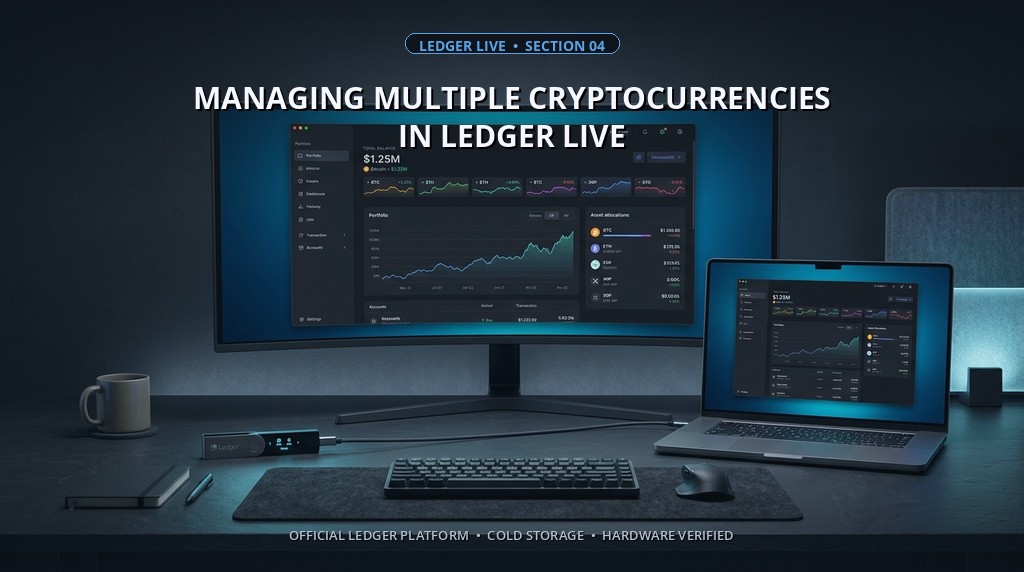
Consolidate all supported blockchain assets under a single portfolio view by navigating to the "Accounts" section, where balances refresh automatically without manual synchronization.
Add new tokens by clicking the "+ Add account" button above your existing holdings list. Filter the over 5,500 supported coins through the search bar, noting that each requires downloading its respective blockchain application through the platform's built-in manager.
For tax reporting, export CSV files containing transaction histories across all currencies simultaneously–this generates one consolidated spreadsheet with trade timestamps, amounts, and countervalue conversions at the time of each event.
Create custom portfolio subdivisions using labeling features for different investment strategies (e.g., "DeFi", "Long-term Holds"), with color-coding to visually distinguish categories during market monitoring. These tags persist when switching between computer and mobile interfaces.
Sending and Receiving Crypto via Ledger Live
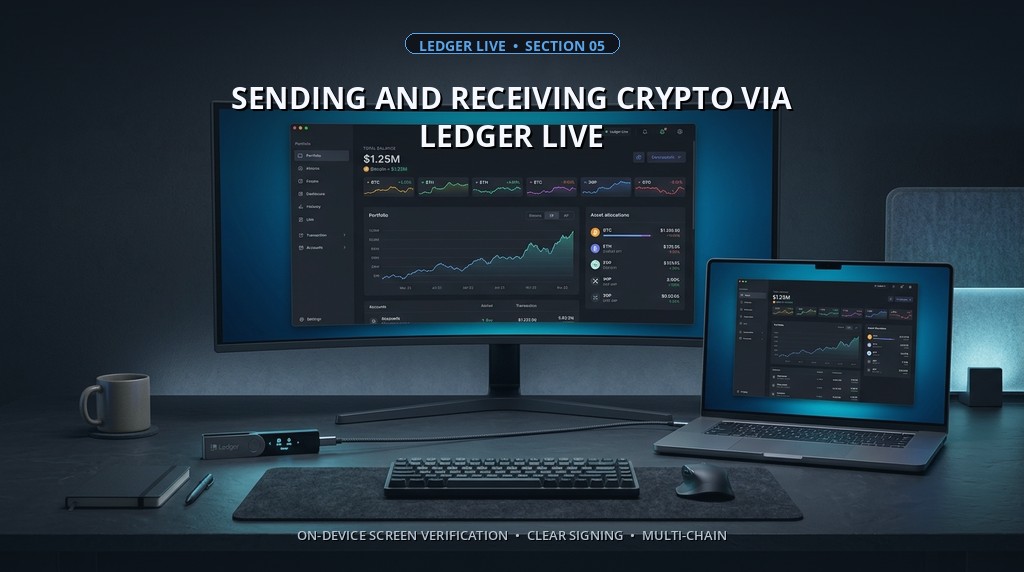
To initiate a crypto transfer, ensure your device is connected and unlocked. Navigate to the asset you wish to send, click “Send,” and enter the recipient’s address. Double-check the address and amount before confirming the transaction on your hardware wallet.
Receiving funds is straightforward. Open the app, select the cryptocurrency, and click “Receive.” A unique address will appear. Share this address with the sender. Always verify the address matches the one displayed on your hardware device to avoid scams.
For Bitcoin transactions, consider enabling Replace-By-Fee (RBF) if faster confirmations are needed. This feature allows adjusting the transaction fee after sending. Note that not all wallets support RBF, so confirm compatibility with the recipient’s setup.
When handling Ethereum-based tokens, verify the contract address of the token. Mistakenly sending tokens to a wrong address can result in permanent loss. Use blockchain explorers to cross-check the token’s details before proceeding.
Finally, always keep your app and firmware updated to benefit from the latest security features and improvements. Regularly review transaction history and enable notifications to stay informed about account activity.
Staking Cryptocurrencies Using Ledger Live
To stake assets securely, ensure your wallet is updated to the latest version and connected to the application. This minimizes risks and ensures compatibility with supported coins.
Choose a coin like Ethereum or Tezos, both widely supported for staking. Confirm your assets are delegated to a validator or baker directly through the interface, avoiding third-party platforms.
Understand the lock-up periods and rewards. For example, Ethereum staking requires a minimum of 32 ETH and offers an estimated annual return of 4-7%, while Tezos provides more flexibility with no minimum and ~6% APY.
Monitor your staking performance in the app’s dashboard. Real-time updates show rewards, validator status, and any changes in network conditions affecting your stake.
Withdrawals vary by network. Ethereum staked rewards require post-Merge updates to access, while Tezos allows frequent withdrawals with minimal delays.
Always verify transaction details before confirming. Double-check validator addresses and gas fees to avoid errors or overpayments.
For troubleshooting, consult the developer’s guides or community forums. Most issues resolve with wallet re-syncs or network updates.
Updating Ledger Live and Firmware Safely
Always download updates directly from the official website to avoid compromised versions. Verify the source URL manually before proceeding.
Before updating, ensure your recovery phrase is securely stored and accessible. Avoid skipping this step to prevent irreversible loss of access to your assets.
Connect your hardware wallet using the original USB cable provided. Using third-party cables may result in unstable connections or potential security risks.
During firmware updates, keep the device plugged in and avoid interruptions. Power failures or disconnections can cause the update to fail, potentially bricking the device.
After updating, verify the firmware version matches the latest release. Cross-check the displayed version with the information on the official support page.
Enable automatic updates for the application to ensure you receive security patches promptly. Manually check for firmware updates every few weeks.
If errors occur during the update process, restart the device and try again. Persistent issues may require contacting official customer support for assistance.